
Provenance for the AI Era
Every creator, every work, every system — trusted origins for every digital asset. Drag & drop to make your work instantly transactable.
Two sides. One shared record.
Creators need a way to say what they made and how it may be used. AI companies and autonomous agents need a way to find out — in milliseconds, at machine scale, with evidence they can keep. Today neither side can reach the other. Transactable is the layer in between: one registration on the creator side, one answerable query on the machine side, and a signed receipt that both sides can hold up afterwards.
Two sides that can't hear each other
A creator can care intensely about how their work is used and still have no way to say so in a form a machine will act on. A model developer can be entirely willing to license and still have no way to find out who to pay. The failure is not bad faith. It is missing plumbing.
Terms aren't machine-readable
A licence written for humans cannot be evaluated at crawl speed. A signal like an opt-out header is legible but conveys nothing — it withholds, it never grants.
There is no one to ask
Even a buyer who wants to pay has no address to send the question to. Rights ownership is scattered, unindexed, and for most works never recorded anywhere at all.
Nothing survives the transaction
Compliance is asserted after the fact, from logs neither side controls. What's missing is an artefact created at the moment of use that both parties can keep.
One registration. One query. One receipt.
The whole system is a loop with six moves — three on each side — turning on a shared record in the middle. Everything that follows in this page is one of these six moves explained properly. Read the diagram once and the rest is detail.
Register: pin the work to a moment
Registration is not a filing cabinet. It is the act of binding four things together —a work, a time, a claimant, and a signature — so that everything downstream has something stable to point at. The content itself never has to leave the creator's control; what enters the record is a hash of it.
Because the record is keyed to a fingerprint of the content, a work can be found again after it has been renamed, re-encoded, stripped of metadata, and passed through six intermediaries. Provenance that lives only in an embedded metadata field is one screenshot away from gone. Provenance that lives in a hash-keyed registry is not.
Declare how the work was made
Almost every hard question about an AI-era work — is it protectable, must it be labelled, can it be sold, who gets paid — depends on one thing: how much of it a human actually made. So we ask that once, in plain language, and record the answer in a form every downstream system can read.
The taxonomy is deliberately categorical rather than a percentage slider. Asking a creator to say "62% human" invents a precision nobody has. Asking them which of five sentences describes their process is a question they can answer honestly, and one a reviewer can later check against the basis they supplied.
A documented basis, per mode
Each mode asks for the evidence appropriate to it — the AI tools used, which elements they touched, roughly how many iteration rounds, the specific model and version, whether output was modified after generation.
An attested classification
The mode is the creator's declaration, recorded with the basis they gave for it and reviewed against that basis. It is strong evidence of what was claimed, when, and on what grounds.
A verdict that a work is AI-free
No system can inspect a finished file and prove no model touched it. We do not claim to. What the record establishes is a contemporaneous, signed, checkable declaration — which is what disputes actually turn on.
Set terms a machine can act on
"All rights reserved" tells a crawler nothing it can execute. Terms become useful the moment they answer a specific question — may this particular kind of system do this particular thing, and at what price — in a structure software can evaluate without a lawyer in the loop.
Terms are modelled in five layers because five different kinds of statement are being made, and conflating them is how licensing systems go wrong. A standing public licence is not a preference signal. A preference signal is not a grant. A claim someone made on a third-party site is not the same as terms the rights holder set. And an executed licence is different from an offer nobody has accepted.
// the shape of a terms document{"terms_version": "2026-07-11T00:00:00Z/3","work_id": "txbl:work:8f3a…","instruments": [{ "spdx": "CC-BY-NC-4.0", "url": "https://creativecommons.org/…" }],"offers": {"ai-train": {"permission": "conditional","payment": { "type": "purchase", "amount": 12.00, "currency": "USD" },"attribution": "credit+link","duration": { "type": "perpetual" },"user_class": ["commercial"] } },"guardrails": ["no-likeness", "no-style-prompting"],"territory": "worldwide","governing_law": "California"}
Never sell what a standing licence already grants for free. If a work is published under CC BY, commercial use is already permitted at no charge — offering to sell it back would be misrepresentation. The system refuses to create that offer and returnsalready_permitted instead. What can legitimately be sold on top is the thing CC never provided: a paid licence for uses the public licence withholds, and a receipt proving the use was cleared.
One number both sides point at
Terms change. Prices change. A dispute two years from now is not about what the terms say today — it is about what they said at the moment of use. So every version of a terms document is canonicalised and hashed, and that hash becomes the thing the price quote, the payment, and the receipt all refer to.
Discovery: make the answer findable
A registry nobody can find is a filing cabinet again. So the record does not wait to be queried — it broadcasts pointers back to itself in every format the machine side already reads, and publishes an explicit rule for what wins when two of them disagree.
Each pointer is generated from the same underlying record, so they cannot drift apart. And because one of them travels inside the file itself, a work that is downloaded, re-uploaded and passed along still carries the address of its own terms.
The gate: certify both sides, or don't proceed
This is the load-bearing move. Before a use is cleared, the system checks two things at once: what the registry says about the work, and what a certificate says about the party asking. Neither alone is enough. A work with clean terms accessed by an unidentified crawler is not a cleared use, and a well-behaved certified agent does not get a pass on terms it never read.
A snapshot, not a lookup
The gate does not record "we checked the registry." It records the exact state the registry was in, hashed, so the answer can be re-verified later without trusting anyone's log.
Agents get identities too
An autonomous agent is a party to the transaction. It carries a certificate naming its principal and its permitted scope — which means an out-of-scope action is refusable at the gate, not litigated afterwards.
Strangers who never knock
The gate binds those who pass through it. A party that never touches the gate is outside this system entirely and remains a matter for law, not plumbing. We are direct about that boundary.
Payment at the speed of the request
Licensing at machine scale cannot route through a sales team. When an agent asks for a use that costs something, the answer is a priced challenge carrying the terms hash — and the agent can settle it and continue, in one round trip, with no human on either end.
The economics only work because the amounts are small and the overhead is near zero. Per-use prices in the cents range are viable when settlement costs a fraction of a cent and requires no account opening, invoice, or reconciliation. That is a recent development, and it is what makes per-use rights markets possible at all.
The receipt is the product
Everything before this exists to produce one artefact. A clearance receipt is a signed statement, generated at the moment of use, that binds together the work, the terms as they then stood, the payment, and the identity of the party acting. Both sides get the same one. Neither side has to trust the other's records.
Register once, project everywhere
A creator should not have to describe the same work five times to five institutions in five formats. The record holds the facts once; every external regime is aprojection of that record in whatever shape that regime demands — and when the underlying facts change, every projection changes with them.
What this proves — and what it doesn't
Trust infrastructure that overstates itself is worse than none, because the first serious challenge collapses it. So here is the boundary, drawn deliberately.The system is excellent evidence of what happened. It is not an adjudicator of who was right.
A receipt proves what the registry said and what the parties did. It does not prove that the registry was right about the world. Those are different things, and a system that blurs them is selling certainty it cannot deliver. Ours is designed to be court-ready evidence — not a substitute for the court.
Why this becomes load-bearing now
Two things are converging. Regulation is beginning to demand that AI-generated content be marked and that its provenance be substantiable. And the open web is shifting from crawl-by-default to block-by-default, which turns access into something that must be negotiated rather than assumed.
- ✓The obligation lands on the AI side. Providers and deployers must mark and substantiate. They need a source of truth they did not author themselves.
- ✓The leverage lands on the creator side. When crawling is blocked by default, a creator's terms stop being a request and start being a condition of entry.
- ✓The rail finally exists. Sub-cent machine-to-machine settlement makes per-use licensing arithmetically possible for the first time.
AI-Assisted Analysis
Get instant, proprietary analysis that verifies your work and streamlines your registration process.
International Evidence
Generate robust, globally-recognized evidence of creation for protection that extends beyond US borders.
Monetize the AI Economy
Position your work now to ensure you’re compensated when AI models train on your data.
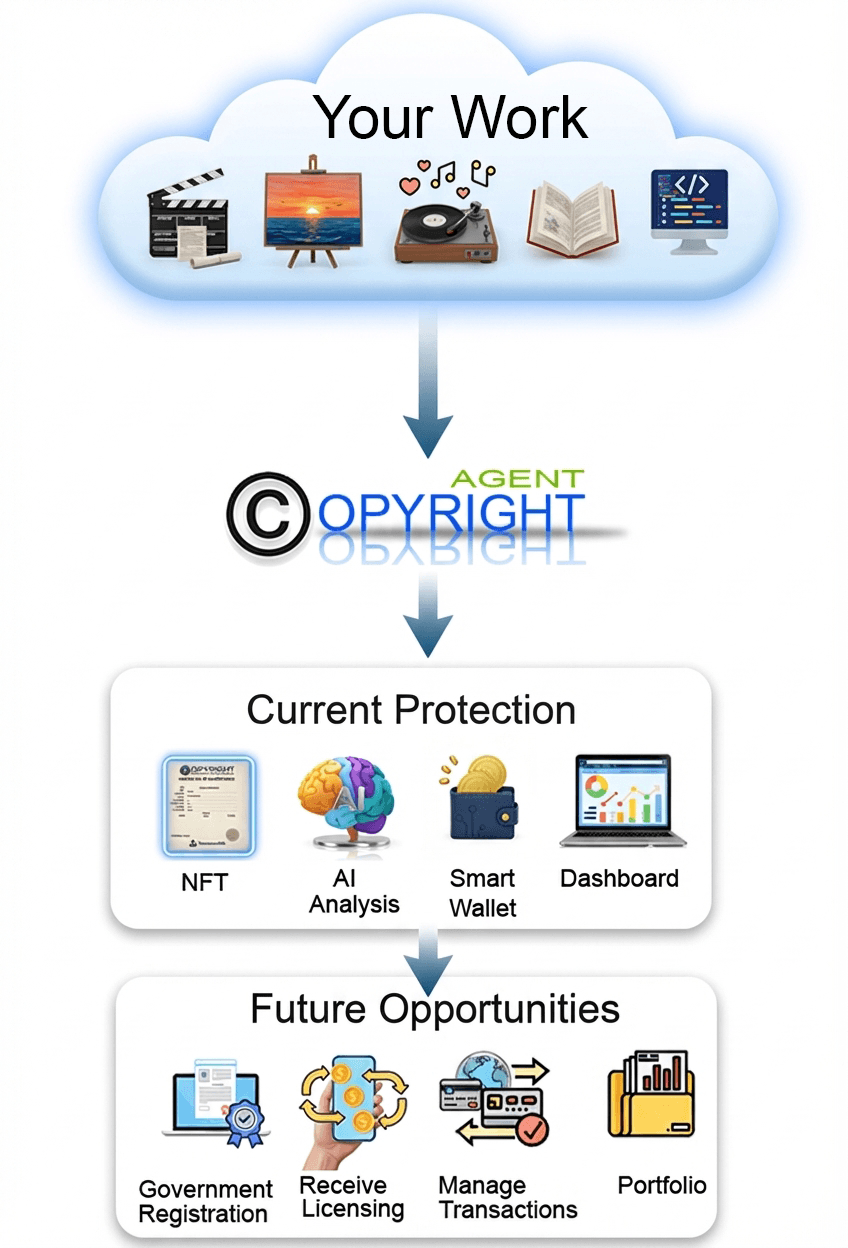
The Future of IP Protection Has Arrived
Copyright 2.0 is the digital rights layer you need.
Your creative work deserves more than a static registration. Transactable Copyright 2.0 is the essential, technology-forward layer built on the foundation of the traditional international copyright regime.
Beyond protection. Beyond borders.
What changes? Everything. We combine blockchain provenance, real-time AI assessments, and NFT transactability to turn your IP into a liquid, licensable, automatically monetizing asset.
The global copyright framework is your shield. Our platform is your engine — we overlay the existing international regime with next-generation technology to create entirely new opportunities for creators.
The Protocol for Digital Ownership
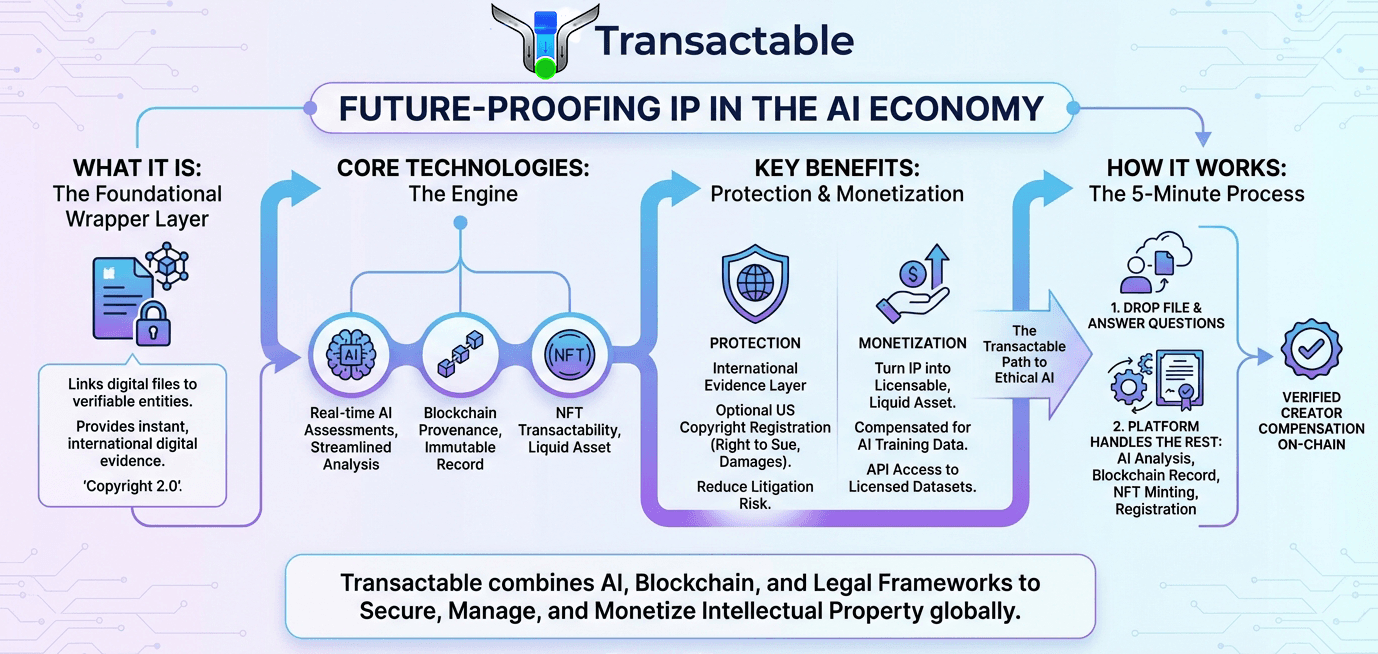
Copyright 1.0 vs. 2.0
The evolution from traditional copyright protection to the modern, AI-enabled system
Copyright 1.0
Traditional System
- Proof of Creation:
Paper records, optional registration
- Monetization:
Licensing, sales after the fact
- AI Content:
Unregisterable / Legally Unclear
- Process:
Slow, complex forms, legal fees
Copyright 2.0
Modern System (Transactable)
- Proof of Creation:
Instant, Immutable NFT Provenance
- Monetization:
Passive Income from AI Training Fees
- AI Content:
Future-Proofing for eventual USCO eligibility
- Process:
Simple drag-and-drop, on-ramp to official USCO registration
Choose Your Copyright 2.0 Path
Different creators have different needs. Find the approach that fits your goals.
AI Artists
Claim Your Seat at the Table Before the Law Changes
The US Copyright Office is still evaluating AI-generated works. By registering today with Copyright 2.0, you establish verifiable proof of creation and ownership that will be invaluable when regulations crystallize. Your blockchain certificate creates an immutable timeline—positioning you ahead of legal clarity.
Proof Now. Protection Later.
- Establish cryptographic provenance today
- Complete transaction history from day one
- Ready for US Copyright Office registration when rules change
- Monetize through AI training licensing now
Traditional Creators & Agencies
The Dual Layer of Protection
Transactable provides the instant, international digital evidence layer (the Copyright 2.0 Wrapper) that backs up and future-proofs your claim. For applications In the US, you can also obtain registration with the US Copyright Office which provides important additional rights in the United States, including the right to sue for copyright infringement and to recover damages and attorney fees.
Instant Provenance. Future Security.
- Instant blockchain provenance certificate
- Streamlined path to official US Copyright Office registration
- Protection for traditional and AI-assisted works
- Peace of mind with dual-layer security
Digital Natives & NFT Enthusiasts
Turn IP into Liquid Capital
Stop viewing copyright as a stale legal certificate. Copyright 2.0 is Transactable. Our Wrapper Layer takes your static digital file and converts it into a liquid, verifiable IP asset (the NFT). This instantly makes your work transactable for sales, licensing, and AI training fees, future-proofing your revenue stream beyond traditional markets.
From File to Fundable Asset.
- NFT certificate with instant liquidity
- Programmable royalties through smart contracts
- Passive income from AI training licensing
- Trade IP assets on secondary markets
Developers & Tech-Savvy Creators
The Protocol for Digital Ownership
We're not just a platform; we are the new protocol for digital asset ownership. Copyright 2.0 is this standard. Transactable provides the foundational Wrapper Layer that links a file to a verifiable entity, making the IP inherently transactable across any blockchain or legal system. This architectural foundation future-proofs digital ownership against technological shifts.
The IP Layer for the Next Internet.
- Cryptographic proof via file hash verification
- Smart contract integration for licensing
- API access for programmatic registration
- Cross-chain compatibility for NFT certificates
Agencies & Professionals
Automation for IP Compliance
Managing IP protection shouldn't require a full-time lawyer. Our Copyright 2.0 Wrapper streamlines the entire process, providing instant NFT proof and an easy, pre-formatted path to US Copyright Office registration. It eliminates the friction of Copyright 1.0, making compliance effortless and future-proofing your entire project catalog.
Compliance Simplified. Protection Maximized.
- Bulk upload for multiple works at once
- Automated US Copyright Office filing preparation
- Dashboard for managing client portfolios
- White-label certificates for client delivery
AI Agents & Developers
Participate and Profit in the AI Economy
You deserve to be compensated for work. As Artificial Intelligence (AI) models increasingly train on existing data, content creators must be ready to get paid for their contributions. It's inevitable that AI companies will need to pay creators when they use their works—and you need to be in line to receive that compensation. Our platform is the essential link between creators and the evolving AI ecosystem. We provide a path for you to not only enforce protections on your copyrighted digital works but also to easily monetize your data when it's used for AI training.
The Transactable Path to Ethical AI.
- Verified creator compensation on-chain
- Reduce litigation risk with compliant data
- API access to licensed training datasets
- Transparent provenance for every work
How It Works
We combine AI analysis, blockchain provenance, and government registration into a 5-minute process. Drop your file, answer a few questions, and your IP Agent handles the rest—processing your work, generating your Certificate of Provenance, minting your NFT, and preparing your official registration.
What you do
You can launch your IP Agent in two easy steps.
Drop file
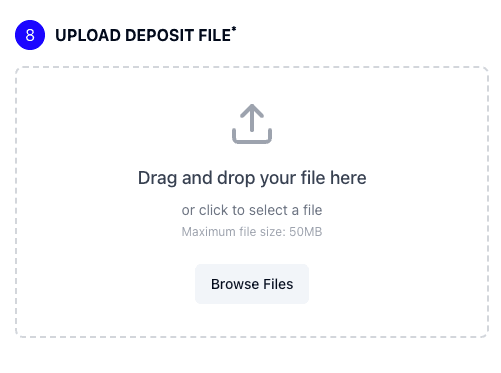
Drop your digital file (code, document, schematic) on our uploader.
Answer a few questions
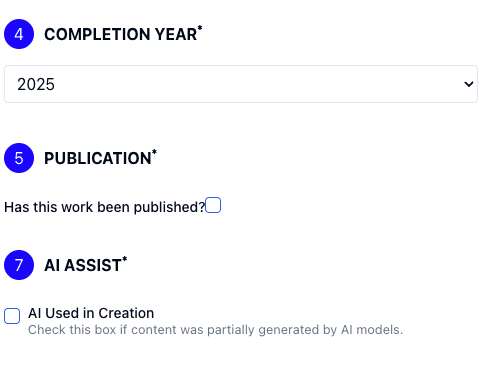
Answer a few questions about your work. Process takes less than a minute.
What we do
We've condensed months of legal processes into minutes.

Initialize Agent
After you drop your file on our uploader, we initialize your IP Agent to start the registration process.
Your profile information, digital file, and answers to our questions are all we need to process your work.
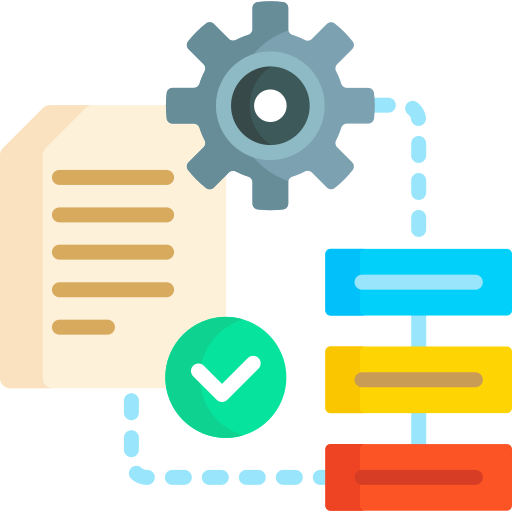
Process File
Your IP Agent submits your file to the File Processing Component to perform the following operations:
- Store the file in our secure file storage
- Create a cryptographic hash of the file
- Programmatically determine the file type
- Create a processed file based on the file type
- Provide processed file for LLM analysis

AI Analysis
Your IP Agent then submits the processed file to the following sub-agents:
- Describer Agent generates a description of the file contents
- Assessment Agent leverages vector store to generate a preliminary copyright assessment based on jurisdiction
- Valuation Agent generates a valuation of the work for access purposes
- Monetization Agent generates a monetization plan for the work based on jurisdiction
Certificate Generation
A Certificate of Provenance is generated by the Certificate Generator with the following information:
- Pertinent copyright information about the work
- AI‑specific information about the work
- QR code of the cryptographic hash of the file for verification
- QR code of the smart contract address for payments and transactions

Blockchain Operations
The Blockchain Operations Component anchors the Certificate of Provenance to the blockchain for tamper‑evident records. It is responsible for:
- Creating your smart wallet (part of profile onboarding)
- Minting the NFT representing Certificate of Provenance
- Anchoring the Certificate of Provenance to the blockchain
- Storing the NFT on a decentralized storage system (IPFS)

Dashboard
The Dashboard is where you can manage assets from one place, including:
- Manage your assets
- Download your Certificates of Provenance
- View your transactions
- Monitor licensing opportunities
Opportunities
With your work registered, your IP Agent is ready to help you monetize your work.
Government Registration
If your jurisdiction has a government registration process, your IP Agent can facilitate the process. Countries with government registration include:
- United States
- Canada
- China
- India
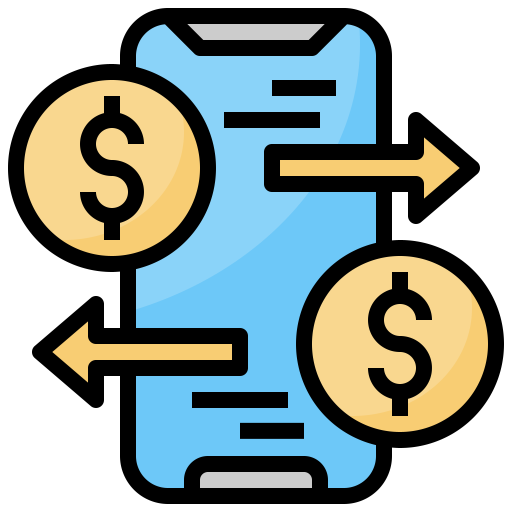
AI Training
Your IP Agent can accept requests from LLMs to train on your work. If you check the "Available for AI Training" box on your registration, your IP Agent will:
- Accept requests from LLMs to train on your work
- Verify that the access fee has been deposited to your smart wallet
- Provide the LLM with a time-scoped access token to ingest your work
Transactions
With your work AI and blockchain enabled, the possibilities are endless. Your IP Agent makes your work infinitely transactable:
- License your work to others
- Sell your work
- Engage in other transactions through smart contracts

Portfolio
Your IP Agent is ready to help you manage your assets and transactions, and build your intellectual property portfolio.
Building the Trust Layer for the AI Economy
The AI economy runs on other people's work — and today, neither side can prove anything. Creators can't show what's theirs or get paid when models use it. AI companies can't show their agents respect anyone's rights. We're extending the Transactable registry into the infrastructure that fixes both: provable ownership on one side, provable behavior on the other, and a licensing market between them.
Clearance Receipts
Every rights check produces a cryptographically signed receipt — including negative results ("we checked; it was not registered"). Receipts are anchored to a public, append-only log that anyone can verify independently, forever.
Register, Vault & Earn
Anchor your work with a low-cost registration, add secure custody when you want it, and opt in to Earn to license your catalog for AI training — on your terms, at your price floor, with a transparent payout ledger.
AI Agents That Verify First
We train Cleared-Use models whose commitment is built into their weights: verify registration and license terms before using any work — and decline with a licensing path when clearance cannot be verified.
Behavior That Is Measured, Not Promised
Every trained commitment is evaluated on held-out scenarios it never saw in training, against a published pass bar — our first Cleared-Use model held its commitment on 97.8% of out-of-domain tests.
Provenance You Can Trace
The commitment itself is a registered, hash-anchored asset on our own registry, and every training run — base model, data fingerprint, evaluation results — is recorded against it and publicly queryable.
A Market Where Both Sides Win
Verified agents license cleared work through automated payment rails; creators get paid and agent operators get audit-ready proof of compliance. The registry sits in the middle, keeping everyone honest.
Register once. Prove it forever. Get paid when AI uses it — and know the agent on the other side was built to ask first.
Bulk Registration
Have a large number of works to register? Our bulk workflows are built for power users, publishers, and companies representing authors. Choose the method that fits your pipeline.
User‑Friendly Web Interface
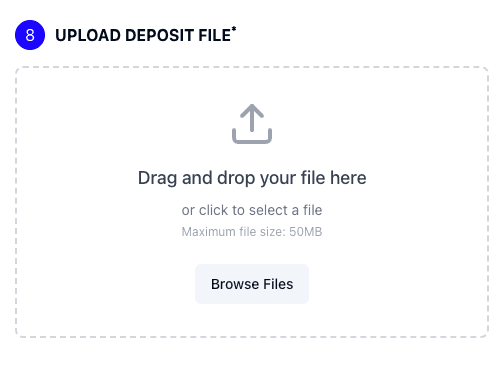
Upload many works using our guided bulk flow. Drag and drop, validate entries, and submit securely with payment in one streamlined experience.
Zip + CSV Manifest
Prefer offline prep? Drop a single .zip containing all files and a CSV manifest. We'll parse, validate, and process each row asynchronously with status tracking.
API‑Only Integration
Integrate directly from your systems using an API key. Create, track, and finalize registrations programmatically.
curl -X POST https://api.transactable.ai/v1/bulk/registrations \
-H 'Authorization: Bearer <API_KEY>' \
-H 'Content-Type: application/json' \
-d '{
"callback_url": "https://yourapp.com/webhooks/transactable",
"items": [
{
"title": "Work 001",
"file_url": "https://cdn.yourapp.com/works/001.pdf",
"jurisdiction": "US",
"ai_training": false
},
{
"title": "Work 002",
"file_url": "s3://bucket/works/002.wav",
"jurisdiction": "CA",
"ai_training": true
}
]
}'
Tip: Use webhooks to receive processing updates per item.
Ready to Upgrade to Copyright 2.0?
Join the future of IP protection — instant provenance, official registration, and passive income from AI training.