 transactable®


 Audio
Audio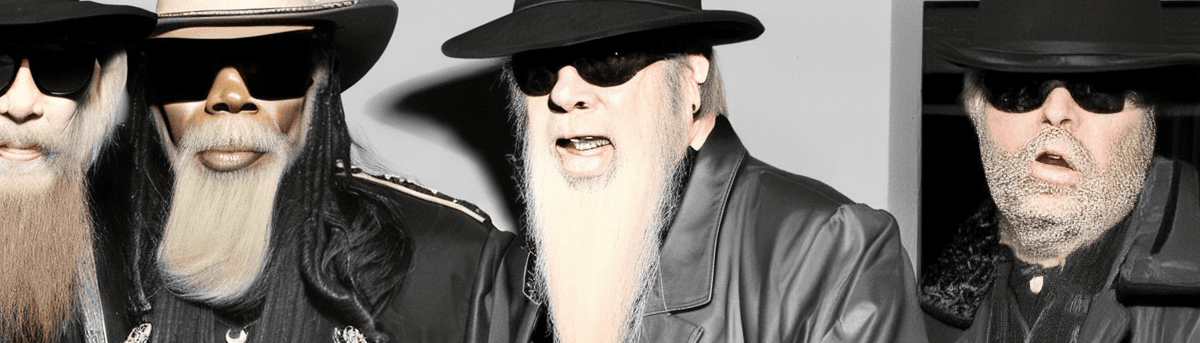
The Bluesman's Surprise: "Hey, That Sounds Familiar..."
Imagine you're John Lee Hooker, the legendary "King of the Boogie," and it's 1991. You're chilling, maybe listening to some radio, when a familiar guitar riff slinks out of the speakers. It's the unmistakable groove of ZZ Top's "La Grange," their iconic 1973 hit. And then it hits you: this isn't just inspired by your 1948 blues classic, "Boogie Chillen'" — it sounds... well, a whole lot like it. More than four decades after you laid down that foundational boogie, and almost two decades after ZZ Top rocketed to fame with their version, the alleged similarity suddenly came into sharp focus.
This belated recognition set off a legal chain reaction that would pit a cornerstone of American blues against one of rock's most recognizable trios, all hinging on a peculiar quirk of early copyright law.
From Delta to Desert: Two Legendary Tracks
Let's rewind a bit. In 1948, John Lee Hooker, alongside Bernard Besman, penned and released "Boogie Chillen'." It was raw, minimalist, and instantly influential, laying down a blueprint for countless blues and rock songs to come. The track sold a staggering number of copies, establishing Hooker as a dominant voice in post-war blues. It was a cultural touchstone, but in the nascent days of commercial music, the intricacies of copyright registration weren't always at the forefront for independent artists. While a version was eventually registered in 1967 (and a second in 1970), the original 1948 recording went out into the world without federal paperwork.
Fast forward to 1973. ZZ Top, the "little ol' band from Texas," unleashed "La Grange." With its driving rhythm, distinctive guitar riff, and talk-singing vocals, it was an instant classic, a permanent fixture on rock radio, and a testament to the band's blues-infused rock 'n' roll swagger. The song's connection to the story of the infamous "Chicken Ranch" brothel in La Grange, Texas, only cemented its legendary status. No one, least of all ZZ Top, seemed to be publicly connecting it to a 25-year-old blues track.
The Boogie Battle: Copyright Act of 1909 Strikes Back
When John Lee Hooker reportedly flagged the similarities to Bernard Besman in 1991, La Cienega Music Company, who owned the rights to "Boogie Chillen'", sprang into action. They notified ZZ Top's publishers of the alleged infringement, hoping to finally get their due. The ensuing lawsuit wasn't just about whether "La Grange" sounded like "Boogie Chillen'" (a similarity many ears could attest to). It was about something far more technical, and ultimately, devastating for La Cienega: the interpretation of "publication" under the Copyright Act of 1909.
ZZ Top's defense wasn't to deny the influence outright, but to argue that "Boogie Chillen'" was, quite literally, fair game. Their legal team contended that when the original 1948 recording of "Boogie Chillen'" was sold to the public without a federal copyright registration, it constituted "publication" under the 1909 Act. This "publication without notice," they argued, meant the song immediately lost its common law copyright protection and entered the public domain. Tough break, but that was the law then, or at least, their interpretation of it.
The Ninth Circuit's Bitter Pill
The District Court initially sided with ZZ Top, ruling that "Boogie Chillen'" was indeed in the public domain. La Cienega Music Company appealed, but the U.S. Court of Appeals for the Ninth Circuit, in 1995, upheld that decision. The court's interpretation was clear: under the 1909 Act, the commercial sale of an unregistered musical recording counted as a "publication." This effectively stripped the composition of its common law copyright protection, consigning it to the public domain.
"Under the 1909 Act, the sale of recordings constituted a 'publication' of the underlying compositions, divesting the compositions of common law copyright protection if they had not been federally copyrighted."
The Supreme Court then delivered the final blow by denying certiorari, leaving the Ninth Circuit's ruling to stand. For La Cienega, it was a bitter pill. A foundational blues track, influential enough to allegedly inspire a massive rock hit, was deemed fair game not because of a lack of creativity or originality, but because of a technicality in a bygone copyright era.
Lessons from the Boogie: Proving When You Made It
The La Cienega Music Co. v. ZZ Top case might feel like an old-school legal battle over a forgotten technicality, but its implications resonate even today. It exposed a glaring flaw in the 1909 Copyright Act, where creators could inadvertently lose protection for their work through early commercial distribution if they didn't jump through specific federal registration hoops. Many viewed the outcome as deeply unfair, a classic case of the law's rigid application trumping equitable justice.
The outcry was so significant that Congress actually stepped in afterward, enacting legislation to correct this perceived inequity and prevent similar situations from happening again. This case is a stark reminder of why it's crucial for creators to establish robust proof of creation from day one. In an era where digital content can spread globally in an instant, relying solely on common law protections or hoping your work doesn't get "published" inadvertently is a risky game.
Modern tools, like those leveraging blockchain for immutable timestamps, can provide undeniable evidence of when a work was created. While traditional registration remains vital, these new avenues offer creators an enhanced layer of modern copyright protection against claims that their work is somehow unprotected. The story of "Boogie Chillen'" and "La Grange" is a powerful testament to the timeless value of creative work and the absolute necessity of safeguarding it.